Porcelain seeds, a prison audience, a broken king, a Paris attic… and one idea that ties them together.
|
Good morning.
This week we went from a museum floor in London to a prison hall in California… and from the Egyptian desert to an attic in Paris.
Let’s review.
|
The Week in Review
Monday 5 – Thursday 8 October
| T |
his week. Four days, four subjects, and one line from each that is worth keeping. Here is what to carry into dinner tonight. |
|
|
What We Covered
| I |
Monday · Art
Ai Weiwei’s Sunflower Seeds
|
In 2010, Ai Weiwei covered the floor of Tate Modern’s Turbine Hall in London with a hundred million sunflower seeds. Each one was porcelain, sculpted and painted by hand in Jingdezhen, China. Six months later, his own government detained him for 81 days without charge. The line to keep: from a distance the seeds look identical… up close, every one is different.
|
| II |
Tuesday · Theater
Waiting for Godot at San Quentin
|
In 1956, Miami audiences walked out of Samuel Beckett’s play about two tramps waiting for a man who never comes. On 19 November 1957, about 1,400 inmates at San Quentin prison in California watched it and understood it at once. The line to keep: the best audience for the play was the one with the most time to wait.
|
| III |
Wednesday · Poetry
Shelley’s “Ozymandias”
|
In 1817, Percy Bysshe Shelley and his friend Horace Smith each wrote a sonnet on the same subject, a fallen statue of the pharaoh Ramesses II. Shelley’s won. It appeared in January 1818 under the pen name Glirastes. The line to keep is its last turn… “Nothing beside remains.”
|
| IV |
Thursday · Vocabulary
“Bohemian”
|
The French called the Romani people bohémiens because they wrongly believed they came from Bohemia, in Central Europe. By the 1830s, Paris used the word for poor young artists, and Henri Murger’s stories made it stick. The line to keep: a word for a place became a word for a people, and then a word for a way of life.
|
|
|
A Way of Looking
| ✦ |
Criticism
The reader finishes the work
|
In 1938, the American scholar Louise Rosenblatt (1904–2005) argued something that sounds simple. A book on a shelf is only ink. The work happens when a reader meets it, and every reader brings a different life to that meeting. Critics call this reader-response theory. In other words, you are part of the art. Now look back at the week. Beckett wrote the same words for Miami and for San Quentin… but the prisoners brought years of waiting, and they heard a different play. Many Londoners saw a grey beach in the Turbine Hall. A visitor who remembered Mao’s posters, with the people as sunflowers turned toward the sun, saw a protest. Even “Ozymandias” is a poem about reading. The sculptor read the king’s sneer, and the traveller read the ruins. Next time someone asks what a work means, add one more question… to whom?
|
|
|
For the Weekend
Worth Reading
|
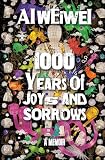
1000 Years of Joys and Sorrows — Ai Weiwei, translated by Allan H. Barr (2021). Monday’s artist tells his own story, and his father’s. Ai Qing was China’s most celebrated poet until he was branded a “rightist” and exiled with his family to a remote region known as “Little Siberia.” The book also covers the 81 days of 2011, from the inside.
|
Where: Any good bookshop or library; the US paperback is ISBN 978-0-553-41948-1. Price: $18.99 in paperback at Rizzoli Bookstore, New York. Insider tip: Read it with this week’s lens in mind. Ai frames the book partly as a letter to his young son, Ai Lao… so you are reading over a child’s shoulder. Buy at rizzolibookstore.com →
|
|
|
|
Something strange is happening to your money.
It wasn't voted on. It wasn't debated in the Senate. And most Americans have no idea it's even taking place but…
Not with crypto. Not with a digital currency. Something far bigger than that – and it's already been signed and sealed in the back rooms of D.C., ready to be issued by the U.S. Treasury.
Bypassing every legal and political channel under the guise of "national security," Trump has enacted this total money reset using a landmark executive order (1421).
Whether you’re a Democrat or Republican, whether you support this new money or not, it doesn't matter.
Soon, every U.S. citizen will be forced to use Trump's New Dollar to fill their gas tank, buy groceries, and pay medical bills.
Which is why I've produced a critical new documentary laying out exactly what Trump's New Dollar means for your savings, your investments, and your family's financial future.
Detailing three important steps you can take today to prepare – including the name of a core band of assets connected to Trump’s initiative that could surge as a result.
As you’ll see in my briefing, the last time America reset its money like this – under Richard Nixon’s presidency in the 1970s – it created one of the greatest wealth divides in the history of our nation.
On one side, it minted an average of 1,300 new millionaires a day for over half a century. And on the other… the folks left behind, drowning in debt, with no idea how to use America’s new money to create wealth.
As Trump rolls out his new dollar, the question is:
If you’re wondering what Trump’s new money will look like, when it will be issued, what it means for your investments – all of those questions are answered in my briefing.


