A writer with no trousers… and how “bohemian” came to mean every broke artist.

Good morning.

Today, an attic in Paris in 1849… and a word that travelled there from the old kingdom of Bohemia.

Let’s begin.

  ◆  

From a Kingdom to an Attic

Le Mot Juste—“Bohemian”

P aris. 1849. A young writer named Henri Murger sits in an attic in the Latin Quarter, the student district on the Left Bank. He is 27 and broke. Then the playwright Théodore Barrière knocks on his door.

Barrière wants to turn Murger’s magazine stories into a play. As the story goes, Murger cannot come to the door… he has no trousers that day.

The two men write the play anyway. La Vie de bohème opens in Paris that November, and it plays to full houses.

So where does that strange word come from?

Bohemia was a kingdom in Central Europe, covering most of today’s Czech Republic. In the 1400s, the Romani people began arriving in France, and the French wrongly believed they came from Bohemia. So they called them bohémiens.

By the 1830s, the name had drifted. Parisians used it for young people who were poor, free, and living by their own rules.

In other words, a word for a place became a word for a people, and then a word for a way of life.

Murger’s stories, collected in 1851 as Scènes de la vie de bohème, made that meaning stick. In 1848 the English novelist William Makepeace Thackeray had already carried it into English, in Vanity Fair.

Then came the music. On 1 February 1896, Giacomo Puccini (1858–1924) opened his opera La Bohème in Turin, and his publisher, Ricordi of Milan, printed this poster.

Adolfo Hohenstein, poster for Puccini’s La Bohème, 1896
Adolfo Hohenstein, poster for Puccini’s “La Bohème,” 1896.

The first time I saw La Bohème, a client had given me the tickets. I knew nothing about opera. By the last act, the banker beside me was crying… and so was I.

A century later, the American composer Jonathan Larson moved the story to New York and called it Rent. Fashion shortened the word to “boho.”

Murger never got rich from any of it. He died in Paris in 1861, at 38.

But his word is still on the move. It began as a mistake about where some travellers came from. Today it names every young artist who climbs to an attic, broke and hopeful… with or without trousers.

  ◆  

Three Things Worth Knowing

I Philosophy Diogenes in his jar

Long before Paris had bohemians, Athens had Diogenes of Sinope (about 412–323 BC). He slept in a large clay jar, owned almost nothing, and mocked every polite custom. Asked where he came from, he said he was a “citizen of the world”… the root of our word cosmopolitan. Murger’s friends were his distant heirs.

II Art The Salon des Refusés

In 1863, the official Paris Salon rejected so many paintings that Emperor Napoleon III allowed a second show for them, the Salon des Refusés. Crowds came to laugh, above all at Édouard Manet’s Le Déjeuner sur l’herbe. Today it hangs in the Musée d’Orsay. That is the bohemian bargain… scorned first, collected later.

III Architecture The Bateau-Lavoir

In Montmartre stood a shabby wooden building of artists’ studios, nicknamed the Bateau-Lavoir after the laundry boats on the Seine. Pablo Picasso lived there from 1904 to 1909, and painted Les Demoiselles d’Avignon there in 1907. Bohemia needs exactly that from architecture: cheap rent and neighbours worth arguing with.

  ◆  

Connoisseur’s Diary

Worth Seeing This Week

Puccini had a rival. Ruggero Leoncavallo wrote his own La bohème from the same Murger book, a year later, and time forgot it. Now the Teatro Regio in Turin, where Puccini’s version was born, is staging Leoncavallo’s in a new production.

Where: Teatro Regio, Piazza Castello 215, Turin. 27 October to 22 November.  Tickets: €40–€120 in the evening, €30–€77 for afternoons.  Insider tip: The preview on 23 October is for under-30s only, at €10 a seat.  Book at teatroregio.torino.it →

Worth Reading

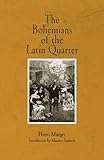
The Bohemians of the Latin Quarter The Bohemians of the Latin Quarter — Henri Murger (1851; University of Pennsylvania Press, 2004). The book that started it all… comic sketches that turn heartbreaking by the end.
Bohemian Paris Bohemian Paris — Jerrold Seigel (1986). The best history of the real bohemia, from Murger’s attic to the Surrealists.
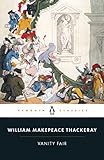
Vanity Fair Vanity Fair — William Makepeace Thackeray (1848). The novel that brought the word into English, starring the brilliant schemer Becky Sharp.

Ignore oil - This is the Energy Story of the century…

  ◆  

Every decade, the cycle repeats...

Oil prices spike.

Energy stocks swing wildly.

Headlines shift from the Middle East to OPEC to Russia - and every time, American investors watch their portfolios get jerked around by forces 6,000 miles away.

We've been fighting oil wars for a century.

But what if I told you there's an energy source sitting right here in America, next to the Grand Canyon, that makes the entire argument irrelevant?

The Biggest Energy Source on Earth

There's an energy source on American soil that holds 50,000 times more power than all the oil and gas reserves on Earth. Combined.

The International Energy Agency says it could meet global electricity demand 140 times over.

For decades, we couldn't reach it.

Then a drilling crew in Utah punched through three miles of granite in 16 days — a job the DOE said should take 64.

Now the floodgates are opening.

Google signed a 15-year contract for 150 megawatts.

The five largest tech companies on Earth are all signing deals.

Billionaires are writing nine-figure checks.

Total investment has surged 100-fold.

The reason is simple:

America faces a 49-gigawatt power shortfall by 2028.

Solar stops at sunset. Wind stops when it stops. Nuclear takes a decade.

The AI data centers going up right now need clean, around-the-clock power — and this is the only source that can deliver it.

One company sits at the dead center of this breakthrough.

P.S. On July 4, 2026 — America's 250th birthday — the government handed this energy source the biggest competitive advantage in modern history... while setting investors like you and me up for a watershed moment.

Your chance to be an "early investor" gets slimmer every day.

My recommendation? Get your shares before today's market close.

  ◆  

Test Your Knowledge

1Why did the French first call the Romani people bohémiens?

They had lived for centuries in Prague
The French wrongly believed they came from Bohemia
It was the name they used for themselves

Answer: The French wrongly believed they came from Bohemia. It was a mistake about geography… the Romani people’s ancestors had come from northern India.

2Where did the philosopher Diogenes famously sleep in Athens?

In a large clay storage jar
In a cave below the Acropolis
On the steps of the Parthenon

Answer: In a large clay storage jar. He owned almost nothing and made a point of living without comforts, which is why his followers were called Cynics, after the Greek word for “dog.”

3Which painting did Picasso make in his studio at the Bateau-Lavoir?

Guernica
Les Demoiselles d’Avignon
Le Déjeuner sur l’herbe

Answer: Les Demoiselles d’Avignon. Picasso painted it there in 1907; Guernica came thirty years later in another Paris studio, and Le Déjeuner sur l’herbe is Manet’s.

  ◆  

That’s all for today.

Tomorrow is Friday… we gather up the week, from Beckett’s two tramps to Shelley’s broken king and Murger’s cold attic, and add one new way of looking at all of them.

In good taste,

Charles T. Mayfair

Editor, Connoisseur Daily

P.S. If you have never been to an opera, make La Bohème your first. Puccini’s score runs under two hours, the story is easy to follow, and the big tunes arrive early. And say the French title the French way: la bo-EM, with no “h” sound at all.