Five years from now, there are going to be two types of retirees in America


Five years from now, there are going to be two types of retirees in America.

One is greeting strangers at Walmart in a blue vest. Not because they want to. Because the war in Iran was the first domino that knocked their retirement sideways and they never saw it coming.

The other is sitting on a beach with a margarita. Not because they got lucky. Because they understood what the Iran war was really about and made one simple move.

The war in Iran isn't about nukes. It's about oil being sold in yuan instead of dollars.

Every barrel that leaves the dollar system makes your savings worth less. And 40 countries are following Iran's lead.

The retiree at Walmart kept everything in the same 401(k) their advisor set up ten years ago. They watched the dollar weaken. They watched inflation eat their savings. They hoped somebody in Washington would fix it. Nobody did.

The retiree on the beach moved a portion of their retirement into the one asset that goes up when the dollar goes down. Took 15 minutes. No taxes. No penalties. And they slept fine while everyone else panicked.

Same starting point. Same savings. One decision made the difference.

A free report called "The Great Gold Reset" shows you exactly what the Iran war means for your dollars, why it's accelerating a shift that was already underway, and the simple move that separates the Walmart greeters from the beach retirees.

   
Grown men wept on opening night, and the producer who'd rejected it regretted it for years… plus three things worth knowing today.

Good morning.

Today, a Broadway opening night that left grown men in tears… and the playwright who insisted his hero be small, physically, and got overruled by every audition in the room.

Let’s begin.


The Salesman Who Sold Everyone but Himself

Arthur Miller—“Death of a Salesman”

N ew York. 10 February, 1949. The curtain fell at the Morosco Theatre. Around the auditorium, ushers watched grown men sit frozen in their seats, unwilling to be seen crying in public.

Arthur Miller (1915–2005) had first sketched the idea for this play decades earlier, as a short story written in his youth about a failing salesman. He expanded it into a full play in the late 1940s, two years after his first Broadway success, All My Sons, had already won him serious attention.

Miller imagined his central character, Willy Loman, as a small, almost shrunken man, someone whose physical size made the weight of his failures land harder. Every actor who auditioned convinced the director, Elia Kazan, of the opposite. The role went to Lee J. Cobb, a large, burly performer who created the part exactly as it opened.

This is Miller, photographed roughly a decade after that opening night.

Arthur Miller, 1966
Arthur Miller, photographed in 1966.

The play follows Willy Loman across a single, disorienting stretch near the end of his career, sliding between the present and half-remembered scenes from the past. Set designer Jo Mielziner built the Loman house with transparent walls, so the audience could see straight into rooms that no longer physically existed except in Willy’s own head.

One producer, Cheryl Crawford, had turned the play down before it reached Kazan… watching the audience weep at the opening, she reportedly regretted the decision for years afterward.

“Attention, attention must finally be paid to such a person.”

Linda Loman, on her husband, Act I

I used to assume “the American Dream” was a subject too broad for one small family drama to carry. Willy Loman’s specific, unglamorous collapse, over territory and commissions and a company car, argues the opposite.

The play ran 742 performances and swept the Pulitzer Prize, the Tony Award for Best Play, and the New York Drama Critics’ Circle Award, all in the same season. Critic Kenneth Tynan later called it simply “the greatest American play.”

The role of Willy Loman has since become a rite of passage for major American actors, from Dustin Hoffman and Brian Dennehy to Philip Seymour Hoffman and, in a 2026 Broadway revival, Nathan Lane. The play has now returned to Broadway seven separate times.

Miller imagined a small man carrying too much weight… Broadway kept casting big men instead, and the weight always lands anyway.


Three Things Worth Knowing

I Art Hopper’s Salesmen

Edward Hopper (1882–1967) spent the same postwar decades painting the same brand of American solitude: hotel lobbies, gas stations, and diners lit by hard, unflattering light. He and Miller never worked together, but both were reaching for the same subject, ordinary American striving that looks emptier the closer you actually look at it.

II Le Mot Juste Tragic Hero

Aristotle originally reserved this term for kings and generals, figures whose fall carried the weight of a whole kingdom. Miller argued, in a 1949 essay published the same week his play opened, that an ordinary man could carry exactly the same tragic weight, provided he fought hard enough to secure what he believed was rightfully his. Willy Loman remains the case study critics reach for first.

III Philosophy Bad Faith

In 1943, the French philosopher Jean-Paul Sartre (1905–1980) described “bad faith” as the act of lying to yourself about your own freedom, pretending a role or a script controls you when you actually chose it. Willy Loman spends the entire play performing a version of success he privately knows has already failed, a textbook case of bad faith staged just years before Sartre’s term reached wide English use.


Connoisseur’s Diary

Worth Seeing This Week

A Broadway revival starring Nathan Lane as Willy Loman opened in March 2026 at the Winter Garden Theatre and is currently running.

Where: Winter Garden Theatre, 1634 Broadway, New York, NY 10019.  Tickets: prices vary widely by date and seat; check the official site for current availability.  Insider tip: the 2026 production won five additional Tony Awards on top of Best Revival, so expect demand to stay high; book further ahead than usual.  Check availability at the official site →

Worth Reading

Death of a Salesman Death of a Salesman — Arthur Miller (1949). The play itself, still fast enough to read in one sitting despite the weight it carries.
Arthur Miller: American Witness — John Lahr (2022). A compact biography from a veteran theater critic, tracing Miller’s life alongside his most famous plays.
Timebends: A Life Timebends: A Life — Arthur Miller (1987). Miller’s own sprawling memoir, including his account of writing and casting this exact play.

Explore Further

Watch: the 1985 television film starring Dustin Hoffman as Willy Loman is widely considered the definitive filmed version, available to rent on most major streaming platforms.  Watch the trailer →

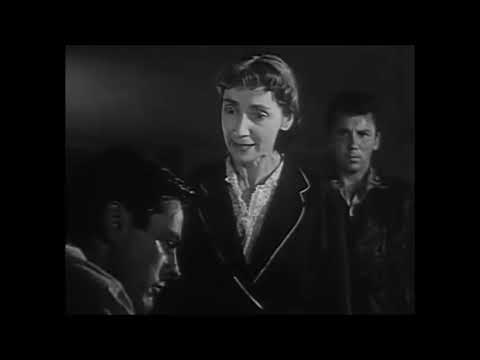
Watch: Mildred Dunnock, who originated the role of Linda on Broadway in 1949, performs the “attention must be paid” speech opposite Kevin McCarthy in the 1951 film.

Attention Must Be Paid — Mildred Dunnock, 1951
“Attention Must Be Paid,” Mildred Dunnock and Kevin McCarthy, 1951.  Watch on YouTube →

Listen: the American Masters archive at PBS hosts a free documentary segment on Miller’s life and this play specifically, at pbs.org/americanmasters.

Browse: the Harry Ransom Center at the University of Texas holds Miller’s working manuscripts and notebooks, with select pages digitized and viewable free online.

Test Your Knowledge

1How did Miller originally imagine Willy Loman, physically?

Small, so the weight of his failures would land harder
Tall and imposing, to contrast with his inner weakness
Miller never specified a physical type at all

Answer: Small, so his failures would land harder. Every audition convinced the director otherwise, and the large, burly Lee J. Cobb got the part instead.

2Who did Aristotle originally reserve the term “tragic hero” for?

Kings and generals, whose fall carried a whole kingdom’s weight
Any character who dies by the final act
Ordinary tradesmen, specifically salesmen

Answer: Kings and generals. Miller argued in a 1949 essay that an ordinary man could carry the same weight, provided he fought hard enough for what he believed was his.

3What did Sartre mean by “bad faith”?

Lying to yourself about your own freedom to choose
Breaking a formal business contract
A term specific to Catholic theology

Answer: Lying to yourself about your own freedom. Willy Loman performs a version of success he privately knows has already failed.

If the links above don’t respond in your email app, just reply with your answers—I’ll write back.


That’s all for today.

Tomorrow, we trade the stage for the page, and a poet who watched the center fail to hold.

In good taste,

Charles T. Mayfair

Editor, Connoisseur Daily

P.S. Read Miller’s 1949 essay “Tragedy and the Common Man” before or after the play… it’s barely three pages, and it’s the same argument the play makes without ever stating it outright.