The architect who won, then walked away, and never saw his building finished… plus three things worth knowing today.

Good morning.

Today, a telegram to an unknown Danish architect… and the building he designed, fought for, and then walked away from before it was finished.

Let’s begin.


The Architect Who Never Saw It Finished

Jørn Utzon—the Sydney Opera House

S ydney. 29 January, 1957. A little-known Danish architect learned his design had just won an international competition. The building it described had no name yet. It barely had a shape anyone knew how to build.

Jørn Utzon (1918–2008) was thirty-eight, working out of a modest office in Hellebæk, a small town north of Copenhagen. He submitted twelve drawings, entry number 218 out of more than 223 designs sent in from 28 countries.

One of the four judges was Eero Saarinen (1910–1961), the Finnish-American architect behind the TWA terminal in New York. Saarinen is said to have pulled Utzon’s entry back out of a stack of rejected designs and refused to accept any other winner. The judges agreed. Utzon, an unknown Dane, had won.

This is the building that resulted, sixteen years and one resignation later.

The Sydney Opera House, designed by Jørn Utzon, completed 1973
Jørn Utzon, the Sydney Opera House, Bennelong Point, completed 1973.

Utzon first drew the roof shells as smooth, flowing curves… inspired partly by orange peel and partly by clouds. Nobody could work out how to build curves like that in concrete. Engineers spent years failing to solve it. In 1961, Utzon found the answer: every shell, however it looked, could be cut from segments of one single giant sphere, the way you might slice up an orange. That one insight let the engineering firm Arup finally get the roof off the drawing board.

The original 1957 budget was seven million Australian dollars. By the time a new state government took office in 1965, the costs had already climbed far past that, and the new Minister for Public Works, Davis Hughes, started withholding Utzon’s fees and second-guessing his designs. Utzon resigned in February 1966. He left Australia with his family two months later, and never set foot in the country again.

I once stood underneath those shells expecting to admire an engineering trick. Instead I found myself thinking about the man who solved the hardest part of the puzzle and then had to watch someone else finish the picture.

Sydney architects and ordinary residents marched through the streets with “Bring Utzon Back” posters. It made no difference. The building opened in October 1973, with Queen Elizabeth II presiding. Utzon was not there. In 1999, more than three decades later, the New South Wales government finally invited him back to design one interior space, a reception room that reopened in 2004 as the Utzon Room, the only room inside the building built exactly to his original plan.

The Sydney Opera House became a UNESCO World Heritage Site in 2007, one year before Utzon died in Denmark, at ninety. He had solved the impossible geometry of the roof from thousands of miles away. He had never once seen the finished building in person.

A telegram announced his name in 1957… the building he never got to walk through still carries it.


Three Things Worth Knowing

I Art Ken Done’s Sydney

The Australian painter Ken Done (born 1940) watched the Opera House go up from his studio on the harbor, and it became one of his signature subjects. His bright, simplified paintings of the shells and the Harbour Bridge, first exhibited in 1980, turned the building into something close to a national logo. You have probably seen his version of it on a tea towel without knowing his name.

II Philosophy Authenticity

Twentieth-century existentialist philosophers, especially Jean-Paul Sartre (1905–1980), spent a lot of time on one question: what does it mean to stay true to yourself under real pressure to compromise? They called it authenticity, choosing your own values even when it costs you. Utzon walking away from his own masterpiece, rather than build it on someone else’s terms, is about as sharp an example as architecture ever produced.

III Le Mot Juste Starchitect

Architecture journalists coined this word decades after Utzon’s resignation, for designers so famous their name sells a building before anyone sees the blueprints. Utzon never much wanted the title. He turned down interviews for years and rarely explained his own work. The building alone made him one anyway, whether he liked it or not.


Connoisseur’s Diary

Worth Seeing This Week

You can walk the forecourt and steps of the Sydney Opera House for free, any day. To see the shells from the inside, including the Utzon Room, book the standard one-hour guided tour.

Where: Bennelong Point, Sydney, NSW 2000, Australia.  Tickets: the standard 1-hour guided tour runs about AU$49 for adults, AU$30 for children.  Insider tip: book online by 5pm the day before; walk-up tickets exist but aren’t guaranteed, especially in peak season.  Book at sydneyoperahouse.com →

Worth Reading

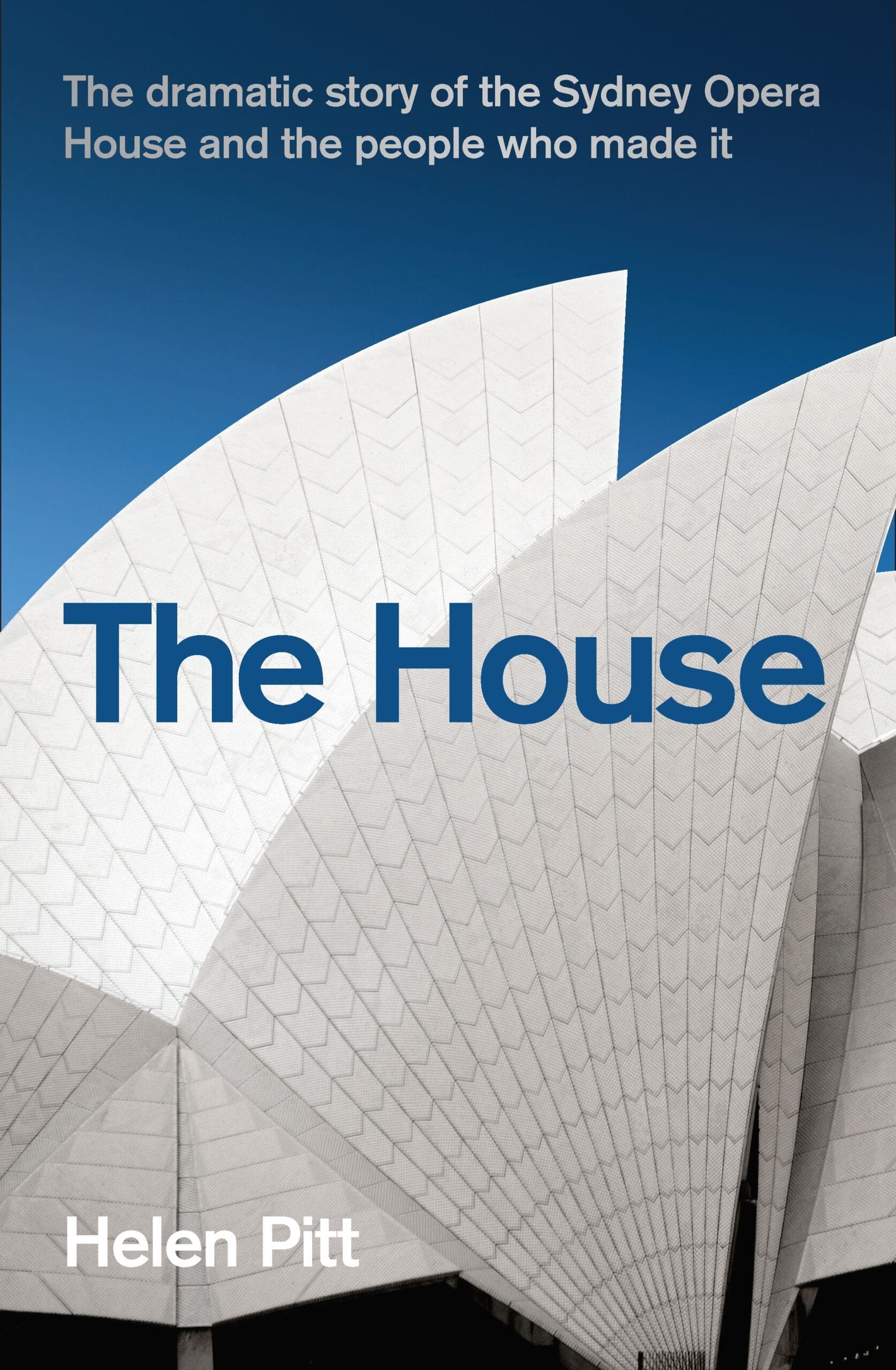
The House The House — Helen Pitt (2018). A journalist’s account of the twenty-year saga, built from diaries, letters, and interviews with the people who lived it.
Eero Saarinen: Shaping the Future Eero Saarinen: Shaping the Future — Donald Albrecht & Eeva-Liisa Pelkonen (2006). A study of the judge who pulled Utzon’s design back out of the reject pile, and the buildings he made himself.
Ove Arup: Masterbuilder of the Twentieth Century Ove Arup: Masterbuilder of the Twentieth Century — Peter Jones (2006). A biography of the engineer whose firm turned Utzon’s orange-peel insight into three thousand tons of standing concrete.

Test Your Knowledge

1What insight, found in 1961, finally solved the “impossible” shell geometry?

Every shell could be cut from segments of a single sphere
Utzon switched from concrete to a lightweight steel frame
The shells were flattened into triangular panels

Answer: Every shell could be cut from segments of a single sphere. That single insight let Ove Arup’s engineers finally build a roof that had stumped everyone for years.

2What does “authenticity” mean in existentialist philosophy?

Staying true to your own values under real pressure to compromise
Only using locally sourced, traditional materials
Never changing a design once it’s submitted

Answer: Staying true to your own values under real pressure. Sartre and other existentialists spent careers on this exact question of choosing your own values under pressure.

3What does the word “starchitect” describe?

A designer whose fame sells a building before anyone sees it
An architect who only designs star-shaped floor plans
A NASA engineer who designs observatory buildings

Answer: A designer whose fame sells a building before anyone sees it. Utzon avoided the spotlight for most of his life, but the Opera House made him one regardless.

If the links above don’t respond in your email app, just reply with your answers—I’ll write back.


That’s all for today.

Tomorrow, we close the building and open a book instead.

In good taste,

Charles T. Mayfair

Editor, Connoisseur Daily

P.S. You don’t need a ticket for the best photo… the forecourt and steps are free and open every day, and the light on the shells is best in the late afternoon.