|
Good morning.
Today, a man who decided to doubt absolutely everything… and the four words he found left standing at the bottom.
Let's begin.
|
The Man Who Doubted Everything
René Descartes — "Cogito, ergo sum," 1637
| L |
eiden. 1637. A French exile, living quietly in the Dutch Republic, publishes a book with no author's name on the cover. He's been in the Netherlands for nine years by now, moving between more than a dozen addresses, mostly to avoid visitors. |
René Descartes (1596–1650) had good reason to be careful. A few years earlier, the Italian astronomer Galileo Galilei had been condemned by the Catholic Church for arguing the earth moves around the sun. Descartes was working on a similar theory of the universe. He quietly shelved it.
Instead, in 1637, he published something stranger and, in its way, more dangerous: a book that asked the reader to doubt absolutely everything they thought they knew.
He wrote it in French, not Latin, so a merchant or a curious housewife could read it without a university education. That alone was a small rebellion. Latin was the language of scholars and the Church; French was the language of everyone else.
The method was simple to describe and brutal to carry out. Take every belief you hold... about God, about the world, about your own body... and ask whether there is any way, however far-fetched, that it could be false. Your senses have deceived you before. Maybe you're dreaming right now. Maybe, Descartes suggested, some powerful demon exists whose only purpose is to feed you a constant stream of convincing lies.
Push far enough down that road and almost nothing survives. The floor under your feet, gone. The sun in the sky, gone. Your own hands, gone.
But something is doing all this doubting. Something is being fooled, imagining, wondering whether a demon exists at all. That something cannot itself be an illusion, because an illusion needs someone there to be fooled by it.
Descartes wrote it down in four words that outlived him by nearly four centuries: je pense, donc je suis. I think, therefore I am.
In other words: everything else can be doubted away, but the doubting itself proves somebody is home.
Here's the man who wrote it, or at least the closest thing we have to him.

|
| Portrait of René Descartes, after Frans Hals, c. 1649. Musée du Louvre, Paris. |
Here's what you're looking at, and here's the catch: it's very likely not by Frans Hals at all. Descartes sat for Hals around 1649, shortly before leaving for Sweden, at the request of a Catholic priest who wanted to keep a likeness of his friend. That original painting is lost. What survives, in the Louvre, is a copy, painted by an unknown hand, for centuries mistaken for the real thing. The most famous face of the man who prized certainty above everything is, itself, a matter of some doubt.
Descartes's own path to that dark conclusion wasn't purely academic. In 1635, in Amsterdam, he had a daughter, Francine, with a servant named Helena Jans van der Strom. He doted on her. In 1640, at age five, she died of scarlet fever. Descartes called it the greatest sorrow of his life. Some biographers think the loss sharpened his hunger for a kind of knowledge that couldn't be taken from him by chance or disease... something certain, something that would hold no matter what the world did to him next.
He didn't stay hidden forever. In 1649, Queen Christina of Sweden invited him to Stockholm to tutor her in philosophy... at five in the morning, in an unheated library, because that was the only hour the queen had free. Descartes, used to sleeping late and thinking in bed, called it the coldest winter of his life. Within months he had pneumonia. He died in Stockholm in February 1650, far from both France and the Dutch Republic that had sheltered him for two decades.
What happened to his body next is stranger than anything in his philosophy.
|
|
Sixteen years after his death, a French ambassador dug up Descartes's remains in Stockholm and shipped them home to Paris. When the crate was opened, his skull was missing. A Swedish soldier guarding the exhumation had apparently stolen it and quietly engraved his own name on the bone.
Over the next century and a half, the skull passed from collector to collector across Sweden, each new owner adding his own name to the surface like a guestbook. One inscription, in Latin, reads: here is the very small skull of a very great man. A Swedish chemist finally bought it back in the 1820s and returned it to France. Today it sits in a glass case at the Musée de l'Homme in Paris, the flagship object in the museum's collection, a short walk from the Eiffel Tower.
Not everyone is convinced it's really his. In 2020, researchers at Lund University in Sweden argued the skull may have been split apart and sold off in pieces, and that a different fragment in their own collection is a better match. Nobody wants to test the DNA... it would mean drilling into an object treated for two hundred years as a scientific relic, over a puzzle nobody can fully settle either way.
Descartes spent his life arguing that the mind and the body were two separate things... that the thinking part of you could, in principle, survive and reason perfectly well without any body at all. It's hard not to notice the joke history has played on him since: his body scattered across a continent for three and a half centuries, argued over by strangers, while his four words kept doing exactly the work he built them to do.
I think about this every time someone tells me they've settled a question "beyond doubt." Descartes tried to find one thing beyond doubt, and it took him years, and what he found was a sentence, not a fact about the world outside his own head. Getting to certainty, it turns out, is a much longer walk than most people assume before they've tried it.
Leiden, 1637. An exile with no name on his book cover, tearing down everything he thought he knew... and leaving behind four words that, three hundred and eighty years later, still haven't been fully doubted away.
|
|
Three Things Worth Knowing
| I |
Art
The Portrait That May Not Be Him
|
The Louvre's famous "Frans Hals" portrait of Descartes is a copy of a lost original, known today mainly through a 1650 engraving made by Jonas Suyderhoef shortly after Descartes died. For nearly two centuries, that copy was treated as an authentic Hals. In the 19th century, when the naturalist Georges Cuvier tried to confirm the identity of the skull now sitting in Paris, he compared its shape to this very painting. In other words: one disputed object was used to help authenticate another.
|
| II |
Literature
Pascal's Answer
|
Blaise Pascal (1623–1662), a brilliant young mathematician and Descartes's own countryman, thought pure reason had been given far too much credit. In his unfinished notebook of essays, published after his death as the Pensées, he wrote a line that has outlasted most of the philosophy written to rebut it: "The heart has its reasons, of which reason knows nothing." Pascal wasn't against thinking. He was against the idea that thinking alone could ever get you all the way to what actually moves a person: love, faith, dread, hope. Descartes wanted to found knowledge on doubt. Pascal thought some of the most important things in life were never going to survive that test, and shouldn't have to.
|
| III |
Le Mot Juste
Cartesian
|
"Cartesian" comes from Cartesius, the Latinized version of Descartes's own name, which scholars of his era used when writing to one another across borders. Today the word shows up far outside philosophy: Cartesian coordinates, the x-and-y grid taught in every geometry class, are named for him too, because he was the one who first thought to describe curves using paired numbers. A "Cartesian split" now describes any sharp, clean division between two things, mind and body being only the most famous example. Not bad, for a man who published his most radical idea with no name on the cover at all.
|
|
|
Connoisseur's Diary
Worth Seeing This Week
Rijksmuseum Boerhaave in Leiden, in the same Dutch city where Descartes's Discourse on Method was first published, is currently showing Truth? The Art of Doubt, an exhibition built around exactly the question that made him famous: how do we ever decide what's actually true? Twenty-seven artworks sit alongside scientific instruments, tackling disinformation, memory, and the fragility of evidence.
Where: Rijksmuseum Boerhaave, Lange St. Agnietenstraat 10, Leiden. Tickets: around €17.50 for adults, €6 for children 4–17, free under 4. Insider tip: the exhibition runs until 3 January 2027, so there's no rush, but Leiden is a 35-minute train ride from Amsterdam and easily pairs with a walk past Descartes's old university town. Book at rijksmuseumboerhaave.nl →
Worth Reading

|
Descartes' Bones — Russell Shorto (2008). The full 350-year saga of the skull, the skeleton, and the argument between faith and reason that outlived them both.
|
|
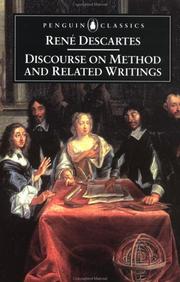
Discourse on Method and Related Writings — René Descartes (1637). Short, plainly written, and still the clearest route into the doubt itself, straight from the source.
|

|
Pensées — Blaise Pascal (published 1670). The heart's rebuttal to the head, from the mathematician who thought Descartes had left something important out.
|
|
|
|
|


